
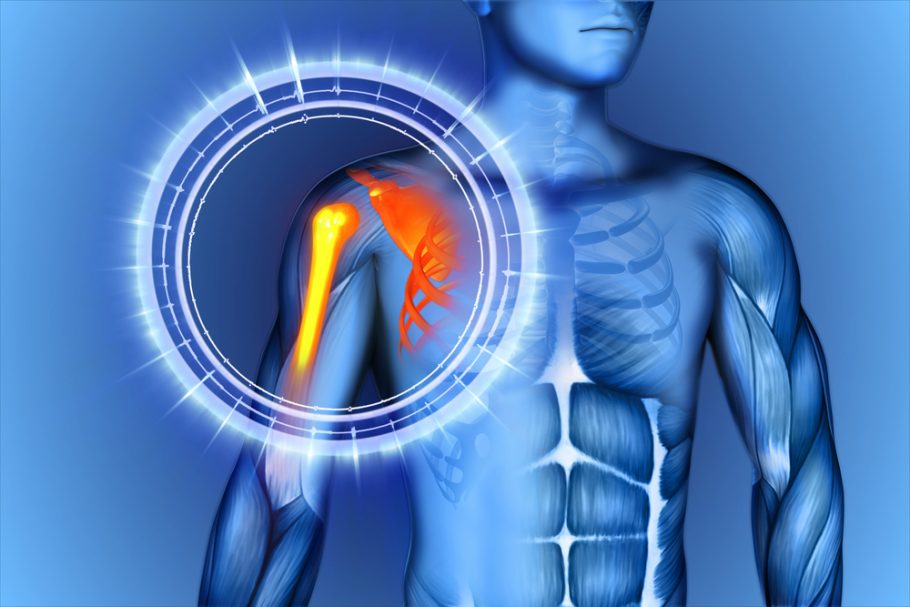
The shoulder is the most mobile but also the most unstable joint of our body, the use of which does not have an “eternal guarantee”
Pain in the shoulder region that lasts unusually long or increases over time, interferes with sleep and daily life and work activities, changes in muscles such as “melting”, limitation of functions during training and without significant injury, loss of movement in the joint without a previously obvious reason, clear are indications that you should consult a doctor, orthopedic specialist Dr. Vladan Stevanović tells eKlinika.
Pain in the shoulder does not bypass either the young or the old
When dealing with a patient with shoulder pain, age plays a significant role.
– In patients aged 40 and over, we predominantly expect that the pain is the result of certain changes in the muscles, i.e. the tendons surrounding the joint, degenerative changes and conditions that lead to the “frozen shoulder” syndrome. Pain in the younger population is mostly of articular origin, i.e. the result of injuries during various sports activities, of which there are too many today without professional control and with extreme demands (multiple “dislocations” of the joint with numerous consequences for soft and bone tissues) – says Dr. Stevanović.
Shoulder pain in conditionally elderly patients is most often the result of inflammatory or mechanical damage to the tendons, i.e. the muscles that surround the joint and are collectively referred to as the rotator cuff. This refers, first of all, to conditions such as the presence of calcifications in the tendons, traumatic or degenerative damage to the tendons, inflammation of the sacs (bursae) under the bony structures that reduce tendon friction (the so-called subacromial bursitis, i.e. entrapment syndrome). Dr. Stevanović adds that to these reasons we can also add painful conditions due to changes in the tendon of the biceps muscle, which is an integral part of the joint. As in the case of other joints, the shoulder joint is not spared from degenerative changes, and, according to him, osteoarthritis is increasingly present and perhaps the most growing number of operative indications for the installation of an artificial joint in recent years.
Do not confuse shoulder pain with cervical spine pain
Pain in the region of the shoulder joint is a complex category that must be viewed from the perspective of age, the existence of provocative factors (injuries, repetition of work or sports activities, pathology of the cervical spine), as well as the region of origin, i.e. the spread of pain.
– It is necessary to point out that pain in the shoulder and neck are often connected, but they certainly have special features: pain in the cervical part of the spine is dominantly accompanied by reaching down the arm to the hand with various sensations of tingling or burning; the pain of the shoulder is localized, it extends mostly to the elbow and is associated with limitations in the movements and function of the joint itself – the doctor describes.
Not every pain is a signal for treatment, is it?
Any pain in the shoulder is certainly a warning that something has been overdone.
– Patients generally recognize which activities, mostly more pronounced, they carried out themselves without preparation or assessment of possibilities (window washing, whitewashing, weekend intensive sports activities, playing with children, pets…). I have no doubt that first it starts with local advice (neighborhood, relatives, acquaintances…) and then global (Dr Google…), but in a large number of cases, if the conditions are not serious, one cannot go wrong. However, the problem arises if the intensity and duration of pain exceeds acceptable levels, and the treatment continues within these, and not within professional frameworks – warns Dr. Stevanović, who is also the head of the Department of General Orthopedics at the IOHB Banjica.
“Frozen shoulder” and the possibility of malignancy
– Unfortunately, in the case of shoulder pain, we cannot rule out primary or secondary malignant conditions, so a good anamnesis with a clinical examination and additional diagnostics is the key to further treatment. In younger patients, shoulder pain is primarily related to certain sports activities, conditions that arise after injuries such as joint instability, but also muscle imbalance as part of training activities – reminds our interlocutor.
Watch how you sit
Dr. Stevanović emphasizes that the so-called body posture significantly affects the function of all joints, and perhaps more significantly the shoulder joint. A forced or hunched position requires significantly more activity from the shoulder muscles when performing normal movements than when a person is in an upright position, i.e. correct position. Today, according to him, great importance is attached to the functioning of the scapula and the associated muscle structures, so it is necessary to maintain muscle tone with the appropriate sitting position and thus help your shoulder.
Advantages of keyhole surgery
– Arthroscopic surgery (or popularly “keyhole surgery”) is a revolutionary method that examines and treats joints from the largest to the smallest, with minimal aggression to the patient, with maximum effects. Of course, not all pathological conditions are accessible to this surgical technique, but with the development of instruments, cameras and equipment as well as implants, new possibilities are opening up every day. The application of arthroscopy in the treatment of both intra-articular and tendinous, i.e. muscle problems of the shoulder is significant, which allows us to achieve better visibility when “repairing” damaged structures, i.e. enables faster rehabilitation after operative treatment. The second level of treatment of dominantly degenerative conditions and the consequences of severe fractures or muscle injuries that cannot be reconstructed is the installation of shoulder endoprostheses. Today, this segment of arthroplasty is on a significant increase in terms of hip and knee prostheses, and in the coming years, such a trend is expected in our country as well – assumes Dr. Vladan Stevanović.
What can we do to preserve the shoulder as long as possible?
The interlocutor of the eClinic says that the most important advice in striving to preserve the shoulder as long as possible would be: maintain muscle tone, perform exercises that strengthen them, do not exceed the limits of what is possible and think about the longevity of the joint. As someone who has been educated in the spirit of modern medicine for several decades, he sees no room for engagement in the so-called “bone breakers” that are popular in our nation – these treatments can sometimes be counterproductive, although there are, as he says, rational approaches in that segment as well. Application of massage, acupuncture or yoga techniques with professional guidance can have more positive effects.
Source: E klinika